

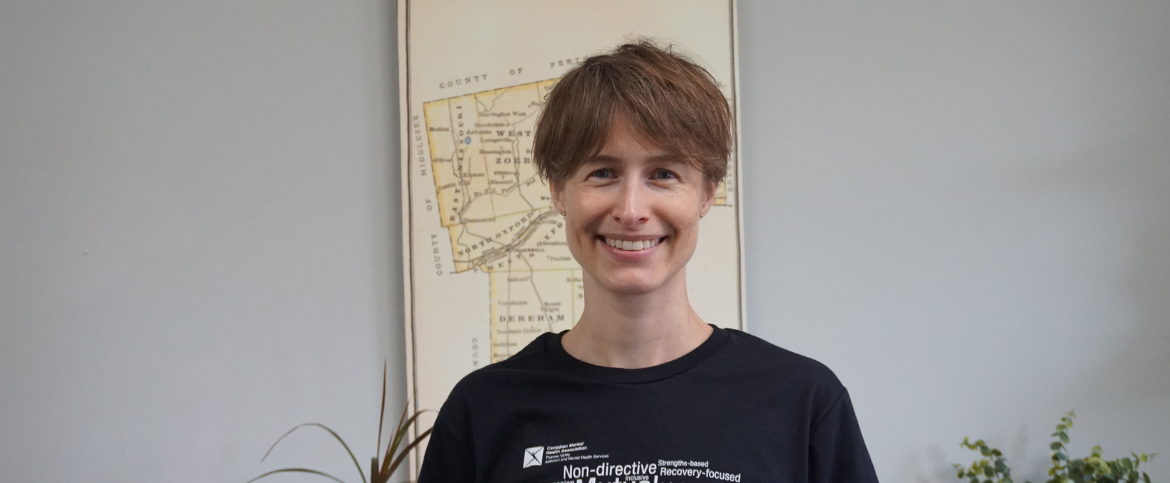
When Stephanie sits down in the dining hall at Operation Sharing, she does not arrive with a clipboard, a diagnosis, or a list of assumptions. In a newly created role, her approach as a Peer Support Worker is rooted in lived experience, compassion, and the belief that people have a better chance to succeed when they are seen as fully human. For Stephanie, peer support is not about fixing people or telling them what their next step should be. It is about meeting people where they are, listening without judgement, and creating the kind of connection that can make moving forward feel possible.
Many of the guests who come to Operation Sharing are carrying complex experiences of mental health challenges, addiction, poverty, housing instability, grief, and trauma. For some people, receiving support can feel unfamiliar or even uncomfortable. Others may be used to systems that focus first on problems, labels, or behaviour. Stephanie’s role creates a different kind of support. She is there to be visible, available, and steady. To an outside observer, it might look like nothing is happening. Sometimes, though, sitting quietly at a table until someone is ready to talk is where connection begins.
Stephanie has seen how powerful those small moments can become. Sitting beside someone with patience has led guests to open up about painful memories and release tears they may have been holding for a long time. Offering clothing, making a coffee, greeting someone by name, or noticing when a person does not seem like themselves are all part of the steady care she brings to Operation Sharing. For people who may spend much of their time trying to remain invisible, being seen by Stephanie can be the first connection to the support they need.
That is the strength of peer support. Operation Sharing already brings important supports together, including meals, clothing, nursing care, system navigation, and community partners. Stephanie’s role adds something vital alongside them: time, trust, emotional support, and a relationship built on equality. She stresses that people are not their addiction, their homelessness, or their diagnosis. They are surviving the best way they know how, often after being failed by families, systems, or communities.
For Stephanie, this work feels like a calling. Her own lived experience helps her relate to people with humility and care. She knows what it means to advocate for yourself, to face hardship, and to wish someone had simply understood or took the time to help. Now, she can offer that presence to others. The impact may not always look dramatic from the outside, but it matters deeply. It can be a guest feeling safe enough to cry, someone choosing not to react, or a person being reminded that they are worthy of kindness.
Stephanie says peer support is like planting seeds and trusting the ripple effects. Through her dedication, those ripples are already moving through Operation Sharing. Each conversation, cup of coffee, quiet moment, and act of respect helps make the day a little lighter for someone who may be carrying more than most people can see. In that way, Stephanie is helping turn local love into action: being present, recognizing shared humanity, and strengthening community from the ground up.