

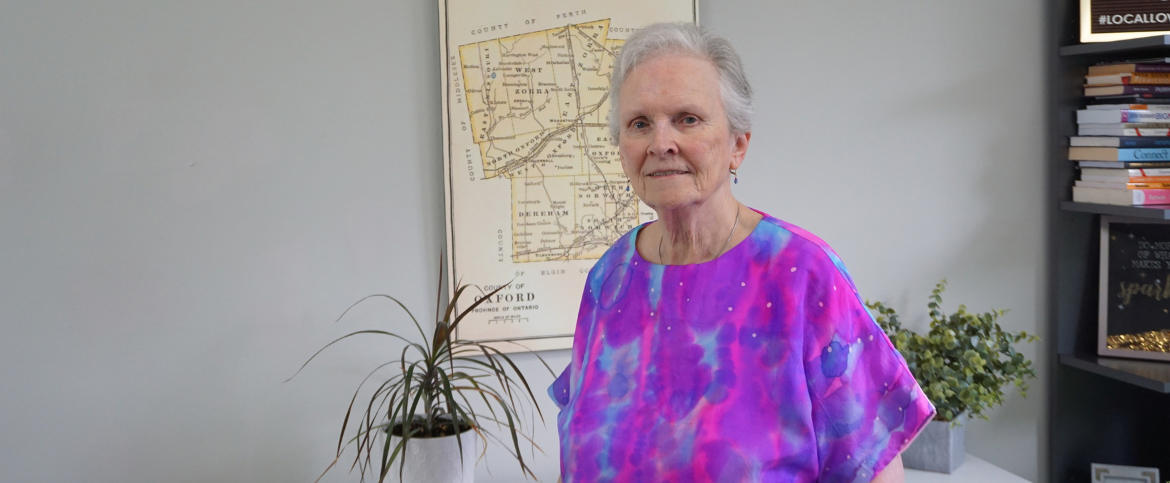
When Maureen and her husband Don began thinking about retirement, they were living in Niagara and starting to realize that aging well would depend on more than their home. Transportation was limited, the hospital was a long drive if they needed it and their family was in Woodstock. They were beginning to think about what life might look like “when they got old.” One day their son gently pushed the conversation forward with a line that still makes Maureen laugh: “Mom, you’re already old.” While it still makes her laugh, she knew that her son’s honesty helped encourage them to think about the kind of place that could support them through the next chapter of life. Soon after, they made the decision to move to Woodstock.
For Maureen, Woodstock felt different than what she was used to. Walking the streets with her granddaughter, she noticed that people smiled, said good morning, and made eye contact. “That’s where it starts,” she says. “It’s a smile on the street.” For her, an age-friendly community is built from those small moments, but also from practical supports like transportation, places to sit downtown, accessible spaces, affordable social opportunities, and programs that keep people learning and connected.
After experiencing some changes, Don and Maureen made some decisions which transformed the way they approached living in the community. They became involved in patient advisory work with the Oxford Ontario Health Team and Maureen began to volunteer as a member of the Age Friendly Communities working group. They saw how important it is for older adults and caregivers to know what help exists before they are in crisis. Today, Maureen stays active through these committees, fibre arts, knitting and weaving.
“Having an age-friendly community means not only physical accessibility, but mental and intellectual accessibility,” Maureen says. She considers her love for fibre arts and compares community connection to the beauty of weaving: “It could be an intellectual fibre connection that we have.” For Maureen, aging well is not about doing everything alone—it is about having a community woven tightly enough that everyone can find what they need.